
Gaussian

Subscribe to Gaussian News & Updates
Editions
Click on the Edition to see more information and pricing
Gaussian 16
Gaussian 16
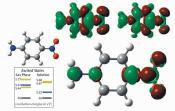 Starting from the basic laws of quantum mechanics, Gaussian predicts the energies, molecular structures, and vibrational frequencies of molecular systems, along with numerous molecular properties derived from these basic computation types.
Gaussion can be used to study molecules and reactions under a wide range of conditions, including both stable species and compounds which are difficult or impossible to observe experimentally such as short-lived intermediates and transition structures.
Investigating the Reactivity and Spectra of Large Molecules
Traditionally, proteins and other large biological molecules have been out of the reach of electronic structure methods. However, Gaussian’s ONIOM method overcomes these limitations. ONIOM first appeared in Gaussian 98, and several significant innovations in Gaussian make it applicable to much larger molecules.
This computational technique models large molecules by defining two or three layers within the structure that are treated at different levels of accuracy. Calibration studies have demonstrated that the resulting predictions are essentially equivalent to those that would be produced by the high accuracy method.
The ONIOM facility in Gaussian provides substantial performance gains for geometry optimizations via a quadratic coupled algorithm and the use of micro-iterations. In addition, the program’s option to include electronic embedding within ONIOM calculations enables both the steric and electrostatic properties of the entire molecule to be taken into account when modeling processes in the high accuracy layer (e.g., an enzyme’s active site). These techniques yield molecular structures and properties results that are in very good agreement with experiment.
New Features in Gaussian 16
New Modeling Capabilities
-
TD-DFT analytic second derivatives for predicting vibrational frequencies/IR and Raman spectra and performing transition state optimizations and IRC calculations for excited states.
-
EOMCC analytic gradients for performing geometry optimizations.
-
Anharmonic vibrational analysis for VCD and ROA spectra: see Freq=Anharmonic.
-
Vibronic spectra and intensities: see Freq=FCHT and related options.
-
Resonance Raman spectra: see Freq=ReadFCHT.
-
New DFT functionals: M08 family, MN15, MN15L.
-
New double-hybrid methods: DSDPBEP86, PBE0DH and PBEQIDH.
-
PM7 semi-empirical method.
-
Adamo excited state charge transfer diagnostic: see Pop=DCT.
-
The EOMCC solvation interaction models of Caricato: see SCRF=PTED.
-
Generalized internal coordinates, a facility which allows arbitrary redundant internal coordinates to be defined and used for optimization constraints and other purposes. See Geom=GIC and GIC Info.
Performance Enhancements
-
NVIDIA K40 and K80 GPUs are supported under Linux for Hartree-Fock and DFT calculations. See the Using GPUs tab for details.
-
Parallel performance on larger numbers of processors has been improved. See the Parallel Performance tab for information about how to get optimal performance on multiple CPUs and clusters.
-
Gaussian 16 uses an optimized memory algorithm to avoid I/O during CCSD iterations.
-
There are several enhancements to the GEDIIS optimization algorithm.
-
CASSCF improvements for active spaces ≥ (10,10) increase performance and make active spaces of up to 16 orbitals feasible (depending on the molecular system).
-
Significant speedup of the core correlation energies for W1 compound model.
-
Gaussian 16 incorporates algorithmic improvements for significant speedup of the diagonal, second-order self-energy approximation (D2) component of composite electron propagator (CEP) methods as described in [DiazTinoco16]. See EPT.
Usage Enhancements
-
Tools for interfacing Gaussian with other programs, both in compiled languages such as Fortran and C and with interpreted languages such as Python and Perl. Refer to the Interfacing to Gaussian 16 page for details.
-
Parameters specified in Link 0 (%) input lines and/or in a Default.Route file can now also be specified via either command-line
-
arguments or environment variables. See the Link 0 Equivalences tab for details.
-
Compute the force constants are every nth step of a geometry optimization: see Opt=Recalc.
Gaussian 16W
Gaussian 16W
Gaussian 16W is a complete implementation of Gaussian 16 for the Windows environment.
Gaussian 16W can be used to model many properties
-
Energies using a wide variety of methods, including Hartree-Fock, Density Functional Theory, MP2, Coupled Cluster, and high accuracy methods like G3, CBS-QB3 and W1U.
-
Geometries of equilibrium structures and transition states (optimized in redundant internal coordinates for speed), including QST2 transition structure searching.
-
Vibrational spectra, including IR, non-resonant and pre-resonance Raman intensities, anharmonic vibrational analysis and vibration-rotation coupling.
-
Magnetic properties, including NMR chem-ical shifts and spin-spin coupling constants.
-
Spectra of chiral molecules: optical rotations, VCD and ROA.
-
G tensors and other contributions to hyper-fine spectra.
Gaussian 16W can study compounds and reactions under a wide range of conditions:
-
In the gas phase and in solution.
-
In the solid state, using the Periodic Boundary Conditions facility.
-
Excited states can be studied with several methods: CASSCF and RASSCF, Time Dependent DFT and SAC-CI.
-
The Atom Centered Density Matrix Propagation (ADMP) method can be used to perform molecular dynamics simulations in order to study reaction paths and product state distributions.
Gaussian 16M
Gaussian 16M
Gaussian 16M is a complete implementation of Gaussian 16 for the Mac OS X environment.
Gaussian 16M can be used to model many properties:
-
Energies using a wide variety of methods, including Hartree-Fock, Density Functional Theory, MP2, Coupled Cluster, and high accuracy methods like G3, CBS-QB3 and W1U.
-
Geometries of equilibrium structures and transition states (optimized in redundant internal coordinates for speed), including QST2 transition structure searching.
-
Vibrational spectra, including IR, non-resonant and pre-resonance Raman intensities, anharmonic vibrational analysis and vibration-rotation coupling.
-
Magnetic properties, including NMR chem-ical shifts and spin-spin coupling constants.
-
Spectra of chiral molecules: optical rotations, VCD and ROA.
-
G tensors and other contributions to hyperfine spectra.
-
In the gas phase and in solution.
-
In the solid state, using the Periodic Boundary Conditions facility.
-
Excited states can be studied with several methods: CASSCF and RASSCF, Time Dependent DFT and SAC-CI.
-
The Atom Centered Density Matrix Propagation (ADMP) method can be used to perform molecular dynamics simulations in order to study reaction paths and product state distributions.
-
GaussView 6.1.1
GaussView 6.1.1
GaussView 6 is the most advanced and powerful graphical interface available for Gaussian 16. With GaussView, you can build or import the molecular structures that interest you, set up, launch, monitor and control Gaussian calculations, and view the predicted results graphically, all without ever leaving the application. GaussView 6 includes many new features designed to make working with large systems of chemical interest convenient and straightforward. It also provides full support for all of the new modeling methods and capabilities available in Gaussian 16.
This brief introduction is a Quick Start to using GaussView 6 to investigate molecules and reactions with Gaussian 16. We invite you to try the techniques described here with your own molecules.
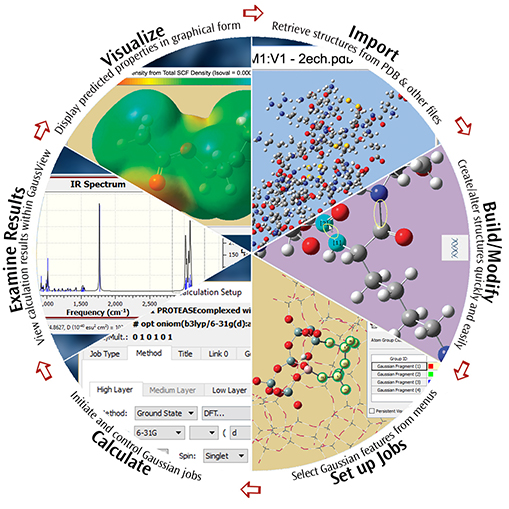
Examples: Visualizing Molecules & Reactions with GaussView 6
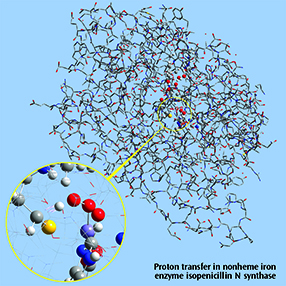 |
Close up: Proton transfer IRC, nonheme iron enzyme isopenicillin N synthase (IPNS)This 5368-atom system was studied with the ONIOM method in Gaussian, and the results were visualized in GaussView 6. For illustration clarity, hydrogen atoms in the low layer are omitted from display in both the close up and full molecule views. The ONIOM high accuracy layer is visualized in ball-and-stick format; the low accuracy layer is visualized in wire frame format in the close up view and in tube format in the whole molecule view [Lundberg09]. |
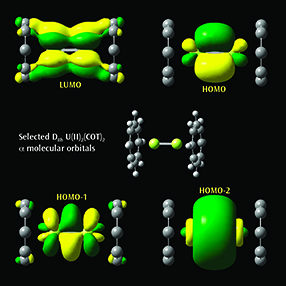
Selected α molecular orbitals for U(II)2(COT)2Each monomer has 4 U valence electrons available for metal-metal bonding: 2 electrons in f σ-type MOs and 2 unpaired electrons in f δ-type MOs. Beginning at the upper left and moving clockwise, the MOs visualized in GaussView 6 are the LUMO, HOMO, and the second-lowest and next-lowest energy MOs below the HOMO; all have D8h symmetry [Zhou10]. |
 |
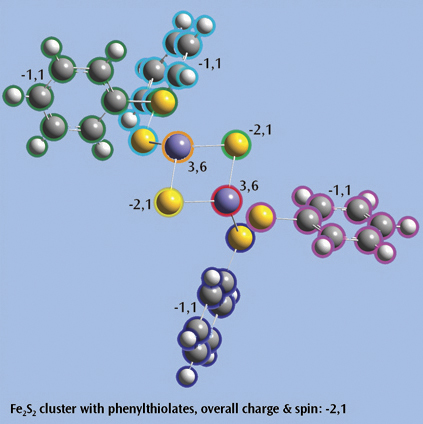 |
Fe2S2 cluster with phenylthiolatesThis is an open shell singlet system with charge -2. It has been set up for a Gaussian fragment guess calculation to model antiferromagnetic coupling. Each iron atom and bridging sulfur atom is placed in its own fragment, and each phenylthiolate group similarly defines a fragment, resulting in a total of eight fragments. GaussView 6 will automatically place the individual charge and spin multiplicity values for the eight fragments (labeled in the illustration) into the route section of the Gaussian job. The resulting wavefunction is stable and optimizes to a proper minimum. |
